How to Clear Slow Drains: A Step-by-Step Guide
- Rooterman Of Indiana
- 1 hour ago
- 8 min read
Table of Contents
Diagnose Your Slow Drain Before You Touch AnythingVisual Inspection TechniquesWhich Fixture Is Affected and What That Tells You
Visual Inspection Techniques
Which Fixture Is Affected and What That Tells You
How to Clear Slow Drains with Baking Soda and Boiling WaterMaterial-Specific Safety: What Your Pipes Can Handle
Material-Specific Safety: What Your Pipes Can Handle
Cleaning the P-Trap and Using a Plunger
How to Use a Plumbing Snake to Clear Slow Drains
Eco-Friendly Enzyme Cleaners and Preventative Maintenance
Signs of a Main Sewer Line Clog You Should Not Ignore
When to Call a Professional Rooter Service
Frequently Asked Questions
Last Updated: September 1, 2026
Diagnose Your Slow Drain Before You Touch Anything
A slow drain is a symptom, not the problem itself. The actual obstruction could be a hair clog six inches down the pipe, grease accumulation deep in the drain line, a blocked P-trap, or the early sign of a main sewer line failure. Spend two minutes diagnosing before you touch anything.
Visual Inspection Techniques
Remove the drain cover or stopper and shine a flashlight into the drain, looking for visible debris: hair clumps, soap scum, or standing water. Check whether water pools immediately when you run the tap (obstruction likely close to the fixture) or drains slowly but eventually clears (clog further down the line). Note any visible pipe corrosion around the drain flange, which signals a longer-term pipe integrity issue.
Pro Tip Use a bent wire coat hanger or dedicated drain hair tool to probe the first 6-8 inches of the drain before reaching for any cleaning product. You'll often pull out the entire obstruction in one pass.
Which Fixture Is Affected and What That Tells You
The location of your slow drain indicates the likely cause:
Bathroom sink: Hair and soap scum caught in or just below the stopper
Kitchen sink: Grease accumulation and food debris
Shower or tub: Hair clogs caught in the P-trap
Multiple fixtures draining slowly at once: Points to a main sewer line obstruction, not individual fixture clogs
If only one fixture is affected, start with the DIY methods below. If two or more fixtures are sluggish simultaneously, skip ahead to the sewer line section.
How to Clear Slow Drains with Baking Soda and Boiling Water
The baking soda method works because it addresses organic buildup, decomposing hair, soap residue, and grease that coat pipe walls and restrict flow.
Here's the standard process:
Remove any standing water from the basin
Pour one cup of baking soda directly into the drain
Follow immediately with one cup of white vinegar; the chemical reaction breaks up soft organic buildup
Cover the drain with a stopper or cloth to direct the reaction downward
Wait 15-20 minutes
Flush with the hottest tap water available, or carefully pour boiling water if your pipes can handle it (see material note below)
This method works best on soft clogs: soap scum, light grease, and minor organic buildup. It will not dissolve a solid hair clog or move a physical obstruction. If the drain doesn't improve after one treatment, move to the mechanical methods below.
Material-Specific Safety: What Your Pipes Can Handle
Pipe Material | Boiling Water Safe? | Vinegar Safe? | Chemical Drain Cleaner Safe? |
PVC plastic | No, can warp joints | Yes | Use sparingly |
ABS plastic | No, can soften | Yes | Use sparingly |
Copper | Yes | Yes | Avoid, accelerates corrosion |
Cast iron | Yes | Yes | Short exposure only |
Galvanized steel | Yes | Short exposure | Avoid, worsens corrosion |
For PVC and ABS pipes, standard in most homes built after the 1980s, use very hot tap water rather than boiling water. Boiling water at 212°F can soften PVC joints and cause leaks far more expensive than the original slow drain (peer-reviewed research).
Watch Out Never mix chemical drain cleaners with the baking soda and vinegar method. Combining these can create hazardous reactions and toxic fumes. Always flush thoroughly with water between any treatments.
Cleaning the P-Trap and Using a Plunger
The P-trap is the curved section of pipe directly beneath your sink or fixture. Its job is to hold water that blocks sewer gases, but that same curve is where hair, grease, and debris collect most aggressively.

To clean the P-trap:
Place a bucket directly under the curved pipe
Unscrew the slip nuts on either side of the P-trap by hand or with pliers
Remove the trap and empty its contents into the bucket
Clean the inside with a bottle brush or old toothbrush
Inspect the pipe opening in the wall for visible debris and remove it
Reinstall the trap, hand-tighten the slip nuts, and run water to check flow and confirm no leaks
Using a plunger correctly is the other first-line mechanical method. Use a cup plunger (dome shape) for sinks and tubs; a flange plunger is designed for toilets. Cover the overflow opening with a wet cloth before plunging to direct pressure downward. Apply firm, rhythmic pressure for 15-20 strokes, then pull the plunger off sharply. Repeat two or three times before evaluating whether the drain has cleared.
How to Use a Plumbing Snake to Clear Slow Drains
A drain auger (plumbing snake) is the right tool when plunging fails and the clog is deeper in the drainage system.
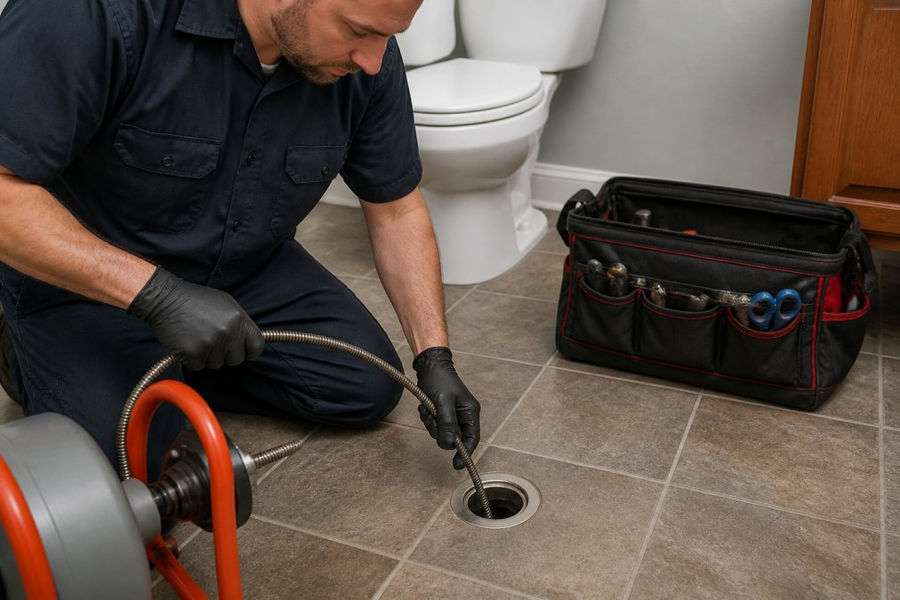
Standard hand-crank drain snake procedure:
Insert the cable end into the drain opening
Turn the handle clockwise as you push the cable forward; never force it
When you feel resistance, you've reached the obstruction
Continue rotating to break up the clog or hook it for removal
Pull the cable back slowly while rotating to retrieve debris
Run hot water to flush loosened material through the drainage system
Repeat if flow rate hasn't fully restored
A standard hand-crank snake reaches 15-25 feet, covering most fixture-level clogs (the NIH). For deeper obstructions, a motorized drain auger is required, and most homeowners are better served by a professional.
Pro Tip Wear rubber gloves when operating a drain snake. Feed the cable slowly to avoid kinking it against pipe joints.
Eco-Friendly Enzyme Cleaners and Preventative Maintenance
Enzyme drain cleaners use biological cultures that consume organic matter: hair, grease, soap residue, and food particles. Unlike chemical cleaners, they work slowly, often requiring overnight treatment. They excel at ongoing preventative maintenance, used monthly, they keep organic buildup from accumulating to the point where a clog forms.
A practical preventative maintenance schedule:
Task | Frequency | Method |
Enzyme cleaner treatment | Monthly | Pour per product instructions, leave overnight |
Hot water flush | Weekly | Run hot tap for 60 seconds after dishes or bathing |
P-trap visual inspection | Quarterly | Check for slow flow, odor, or visible buildup |
Drain hair tool cleaning | After each shower | Remove and dispose of hair before it enters the pipe |
Garbage disposal maintenance | Monthly | Ice cubes + coarse salt, run with cold water |
Enzyme cleaners are safe for all pipe materials, making them the right choice for older homes with copper or galvanized steel pipes where repeated chemical cleaner use accelerates corrosion.
Signs of a Main Sewer Line Clog You Should Not Ignore
Most slow drains are isolated fixture problems. A main sewer line clog is a different category entirely.
Signs that point to a sewer line obstruction:
Multiple fixtures draining slowly at the same time
Gurgling sounds from one drain when you use another fixture
Water backing up into a tub or shower when you flush the toilet
Sewage odor throughout the house rather than from a single fixture
Slow drains that return within days of clearing them
The vent pipe is often overlooked. The plumbing vent system runs through your roof and allows air into the drainage system to maintain proper flow (the CDC). A blocked vent pipe from leaves, debris, or a bird's nest creates negative pressure that slows every drain in the house.
Watch Out If you see sewage backing up into floor drains or tubs, stop using all water immediately. Running additional water into a fully blocked sewer line risks sewage overflow inside the home. This requires immediate professional attention.
When to Call a Professional Rooter Service
Some slow drain situations require equipment and diagnostic tools beyond DIY methods.
Call a professional rooter service when:
The clog returns within a week or two of clearing
Multiple fixtures are affected simultaneously
You hear gurgling or see water backing up from other fixtures
There's a persistent sewage smell after cleaning
The drain snake meets resistance you can't break through
You suspect tree root intrusion into the sewer line
The home has older clay or cast-iron sewer lines that haven't been inspected recently
A licensed plumber can run a camera through the sewer line to identify the exact location and nature of the obstruction, whether it's a debris clog, root intrusion, pipe offset, or partial collapse. That diagnostic information changes the repair approach entirely.
RooterMan of Indiana provides 24/7 emergency rooter and drain service, with licensed technicians who document their work with photos before and after every job. That photo documentation shows exactly what was found in the line and what was done to fix it, with no vague estimates or surprise charges after the fact. For persistent or multi-fixture slow drains that haven't responded to DIY methods, professional diagnosis is the faster and more cost-effective path.
Frequently Asked Questions
Q: Why is my sink draining slow but there's no visible clog?
A: A slow drain without an obvious blockage usually points to partial organic buildup coating the inside of the pipe walls, a partially obstructed P-trap, or a blocked vent pipe reducing hydrostatic pressure in the drainage system. Soap scum and grease accumulation narrow the pipe opening gradually, so the obstruction never fully blocks flow. Running a drain snake past the P-trap or flushing with hot water and sodium bicarbonate often restores normal flow rate.
Q: When should you call a professional plumber for a slow drain?
A: Call a professional rooter service when multiple fixtures drain slowly at the same time, when you notice gurgling sounds from other drains or toilets, or when DIY methods have failed twice. These signs of a main sewer line clog go beyond a simple hair clog or grease buildup. A licensed technician can run a camera inspection to find the root cause deep in the sewer line rather than treating symptoms at the surface.
Q: Does baking soda and vinegar actually unclog drains?
A: The baking soda and vinegar method works best on light organic buildup and odor, not dense hair clogs or grease accumulation. The chemical reaction between sodium bicarbonate and acetic acid produces fizzing that can loosen soft debris, but it does not dissolve hair or break apart compacted grease the way enzymatic cleaners or mechanical tools like a drain auger do. Use it as a maintenance flush, not a primary fix for a stubborn slow drain.
Q: Is it safe to use chemical drain cleaners in older pipes?
A: Caustic chemical drain cleaners can damage older metal pipes and deteriorate PVC joints over time, compromising pipe integrity with repeated use. They also pose a serious safety risk if they splash back during use. For older plumbing fixtures, stick to hot water flushes, natural cleaning agents, or mechanical debris removal with a plumbing snake. If you are unsure about your pipe material, a professional inspection before using any chemical cleaner is the safer choice.
Slow drains that don't respond to basic cleaning almost always have a cause that's deeper or more structural than surface treatments can reach. RooterMan of Indiana's licensed technicians use camera inspection, professional-grade drain augers, and photo-documented diagnostics to find the root cause and fix it correctly the first time, not just temporarily. Schedule online to get a licensed plumber on-site fast.
Schedule Online
This article was written using GrandRanker


Comments